Are Weight Loss Supplements Worth the Money? An Honest Cost-vs-Benefit Look
Quick answer: is a weight loss supplement worth the money?
Sometimes. A weight loss supplement is worth the money when it is fairly priced, uses researched doses on an open label, and helps you stick to a routine — because the calorie deficit still does the heavy lifting. It is not worth it when you are buying a promise to skip the deficit entirely.
- Realistic effect: most produce single-digit-pound support at best, layered on top of diet and activity.
- Where value hides: in adherence and convenience, not in a hidden fat-burning mechanism.
- How to price it: per serving, against the label — not against the marketing headline.

The real question behind "is a weight loss supplement worth the money"
Roughly twenty-seven thousand people type some version of "weight loss supplement" into a search box every month, and a large share of them are really asking a budgeting question in disguise: is this a smart purchase, or am I about to feed forty dollars a month into a jar of hope? It is a fair thing to ask, and the supplement industry is very good at making sure you never quite get a straight answer. So here is one. A weight loss supplement is worth the money only when you understand what it can and cannot buy, and price it accordingly. Bought that way, some are reasonable. Bought as a shortcut around the fundamentals, almost none are.
The confusion starts with the word "work." A product either works or it doesn't, the marketing implies, and the price is simply what access to a thing that works costs. Real life is fuzzier. Nearly every credible weight-management ingredient produces a small effect at best — a pound or two of extra separation from a control group over two or three months, with wide uncertainty around even that. It is real. It is also easily erased by one bad week of sleep, one holiday, or one stressful stretch at work. Deciding whether that small effect is worth paying for is a value judgement, not a yes-or-no fact, and nobody can make it for you without knowing the price and your own habits.
What a weight loss supplement can and cannot buy you
Start with the ceiling. No pill, powder or gummy overrides thermodynamics. If you are eating more energy than you burn, no supplement on the market will produce sustained weight loss, and any product that claims otherwise is selling you a story. This is not a controversial position among researchers; it is the boring consensus. The energy deficit does the work. Everything else is at the margins.
So what is left to buy at those margins? Three honest things. First, a modest metabolic nudge from a few ingredients with some evidence behind them — small, but not zero. Second, and more importantly, adherence help: a fixed daily ritual, a satisfying alternative to a sweet snack, a psychological anchor that keeps a plan alive through week six when motivation has evaporated. Third, convenience — a single format that bundles a few things you might otherwise buy separately. Those are worth something. They are just not worth the price of a miracle, because they are not a miracle.
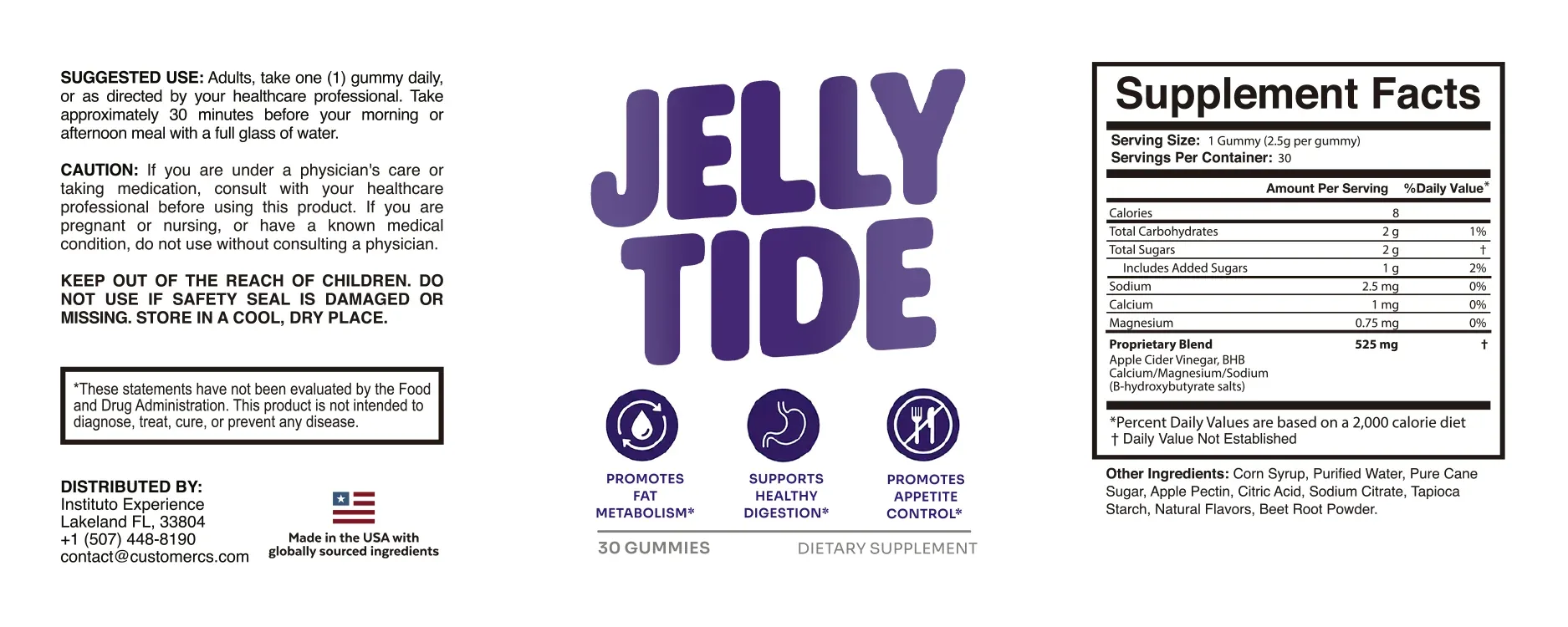
The trap is paying miracle prices for margin-level benefits. A great deal of what you pay for a heavily advertised product is not the formula at all. It is the video, the influencer, the affiliate commission, the packaging and the ad budget. None of that ends up in your bloodstream. If you want to see the difference in plain numbers, our transcription of the JellyTide apple cider vinegar and BHB gummy Supplement Facts panel lays out exactly what a serving contains, which is the only figure that has any bearing on value.
Myth one: "if it were a waste of money, it wouldn't sell so well"
Sales volume tells you about marketing, not merit. The best-selling products in this category are frequently the ones with the largest advertising budgets and the most aggressive affiliate programmes, not the ones with the strongest evidence. Popularity is downstream of spend. Treat a viral product with exactly the same scepticism you would treat an obscure one — more, if anything, because the machine behind it is bigger. A crowded review section full of five-star praise is not proof of value either; learning to spot fake weight loss reviews and incentivised testimonials is one of the most money-saving skills a supplement shopper can develop.
Myth two: "expensive means it must be stronger"
Price and effect size are barely related. There is no law that says a forty-dollar bottle contains more active ingredient than a fifteen-dollar one; very often it contains less, dressed up better. The active amounts are printed on the label, and the label does not care what the checkout page charged. When two products list the same researched dose of the same ingredient, the cheaper one is the better value, full stop. When the pricier one hides its amounts inside a "proprietary blend," you cannot even make the comparison — which is usually the point of the blend.
Price the formula, not the promise
JellyTide is an apple cider vinegar and BHB gummy that publishes its full Supplement Facts panel, so you can weigh the doses against the price before deciding anything. Current bundles, shipping and the money-back window are only accurate on the manufacturer's own page — there is no fixed figure we can honestly quote here.
See the official offer pageA plain cost-vs-benefit table
It helps to put the spending decision on a single grid. The point of the table below is not to rank brands — it is to show where money reliably delivers something and where it mostly buys advertising. The certainty column reflects how consistent the underlying evidence is.
| What you are paying for | Realistic benefit | Is it worth the money? | Certainty |
|---|---|---|---|
| Open-label supplement at researched doses | Small metabolic nudge plus adherence help | Sometimes, if priced sensibly | Low to moderate |
| Proprietary-blend "fat burner" | Unknowable — doses are hidden | Rarely; you cannot price what you cannot see | Very low |
| Premium price on a common ingredient | Same as the cheap version | No — you are funding marketing | Low |
| Convenience format you would use anyway | Replaces a snack, anchors a routine | Often, for the habit value alone | Moderate |
| Diet, sleep and activity changes | The main driver of any result | Yes — and mostly free | High |
Read down that table and a pattern appears. The cheapest interventions are the most effective, and the most expensive are the least certain. That inversion is the single most useful thing to hold in your head at the checkout. A supplement can be a sensible line item in a budget that already funds the free things properly. It is a terrible substitute for them.
When a weight loss supplement is actually worth buying
Here is the honest green-light checklist. A supplement earns its place in your budget when several of these are true at once. The label is open, listing actual milligram amounts rather than a mystery blend. Those amounts are in the neighbourhood of what the research used, not a fairy-dusting of a headline ingredient. The manufacturer publishes third-party testing. The monthly cost is modest enough that an eight-to-twelve-week trial does not sting. And — this is the underrated one — the format does a second job you genuinely value, like replacing an afternoon sugar hit or giving a morning routine a fixed anchor. If you set expectations sensibly, which our guide to realistic weight loss expectations over the first few months walks through in detail, a modest product can be a reasonable, low-stakes purchase.
The red lights are just as clear. Walk away when the pitch promises weight loss without effort, targets belly fat specifically, quotes only "up to" results, buries doses in a blend, or leans on before-and-after photos and testimonials instead of a label. Walk away faster when the price is high and the disclosure is thin, because that combination almost always means you are paying for the funnel, not the formula.
How much should a good supplement cost?
There is no universal right price, but there is a sane way to think about it: cost per serving, measured against the label. For most weight-management gummies and capsules, a fair monthly outlay lands somewhere around the price of a few takeaway coffees. When a product costs several times that without disclosing researched doses, the premium is going somewhere other than your body. Multi-bottle bundles can lower the per-serving cost, which is genuinely useful if — and only if — you have already decided the product is worth taking daily. Buying six bottles of something you have not tested is not a saving; it is a larger bet.
One more piece of arithmetic people skip: the guarantee. A real, honoured money-back window changes the maths of a first purchase, because it caps your downside. A product you can return if it does nothing is a fundamentally different bet from one you cannot. That is not a reason to buy on impulse, but it is a legitimate part of the value calculation, and it is worth reading the actual terms rather than the badge.

Where the biggest weight-loss value really lives
If the goal is spending wisely, the uncomfortable conclusion is that the highest-value moves cost little or nothing. A consistent calorie deficit, protein at each meal, seven-plus hours of sleep, a daily walk, and enough fibre to keep you full will out-perform any supplement ever formulated, and they are free. A supplement, at best, shaves a little off the edges and makes the routine a touch easier to keep. That is a supporting role, and it should be priced like one. Anyone shopping for the best value in weight management should fund the free things first and treat the jar as the optional extra it is.
None of this makes the category worthless. It makes it a small, honest line in a bigger budget. If a product is transparent, sensibly priced, and doing a job you value, buying it is a defensible decision. If it is opaque, expensive, and sold on promises, keeping your money is the smarter one.
Medical note: this article is general wellness and consumer information, not medical advice, and it does not make a product claim. JellyTide is a dietary supplement, not a drug, and is not intended to diagnose, treat, cure or prevent any disease. Speak to a healthcare professional before starting any supplement, especially if you are pregnant, nursing or taking medication.
Frequently asked questions
Are weight loss supplements a waste of money?
Not automatically, but many are. A supplement is a waste of money when it promises to replace a calorie deficit, hides its doses in a proprietary blend, or costs more than the small, real effect it can deliver. It stops being a waste when it is priced sensibly, uses researched amounts on an open label, and helps you stick to habits that are already moving in the right direction.
When is a supplement actually worth buying?
A supplement is worth buying when it does a second job you value on top of any modest metabolic effect: replacing a sugary snack, anchoring a morning routine, or making a plan easier to follow for eight to twelve weeks. If it changes nothing measurable in that window alongside genuine effort on food, sleep and movement, it is not worth renewing.
How much should a good supplement cost?
There is no single right price, but a fair one is judged per serving against the amounts on the label, not against the marketing. For most weight-management gummies and capsules, a reasonable monthly outlay is roughly the cost of a few takeaway coffees. If a product costs far more than that without disclosing researched doses, you are paying for the advertising, not the formula.
Do expensive supplements work better?
No. Price and effect size are barely related. A high price often reflects marketing spend, packaging and affiliate commissions rather than better ingredients or larger doses. The only reliable way to compare value is to read the Supplement Facts panel, check the amounts against published research, and ignore the number on the price tag until you have.

Related reading
Sources
- NIH Office of Dietary Supplements — Dietary Supplements for Weight Loss
- Federal Trade Commission — Dietary Supplements Advertising Guide
- Mayo Clinic — weight loss: setting realistic goals
- Harvard T.H. Chan School of Public Health — Healthy Weight
- NIDDK, National Institutes of Health — Weight Management
Compare the panel before you spend
Anyone deciding whether a weight loss supplement is worth the money should start with amounts per serving, not a promise. The JellyTide Supplement Facts panel is reproduced on our home page; current bundles, shipping and the guarantee window live on the manufacturer's own page.
Check the current offer